
ClinBacto ID – Biochemical Identification Tool
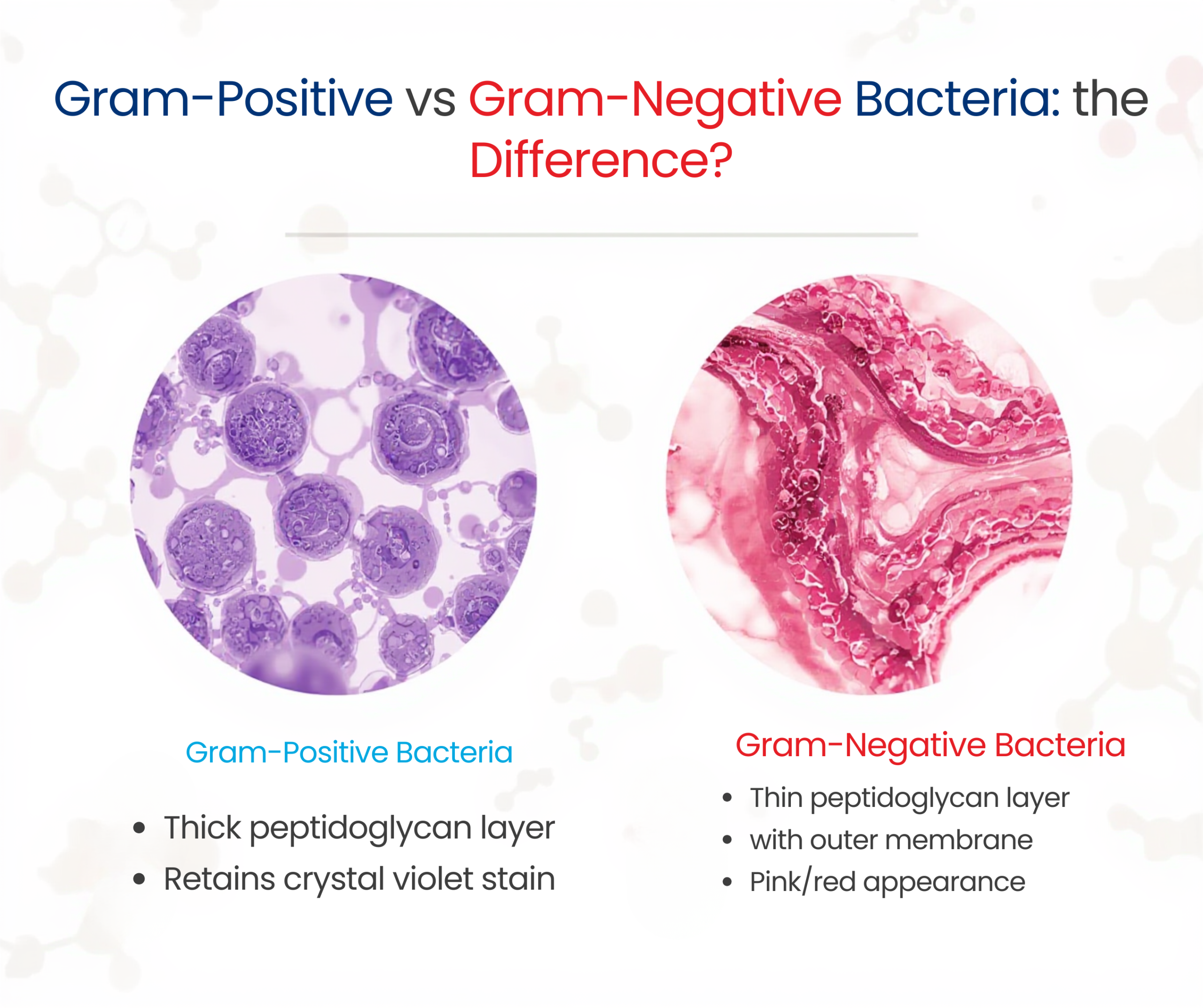
ClinBacto ID – Biochemical Identification method is an tool clearly explains how bacteria are classified using one of the most fundamental techniques in clinical microbiology and helps in Clear Identification of Bacterial Types
🟣 Gram Positive Bacteria Identification Tool
Gram-Positive Cocci Identification Calculator
Follow the step-by-step process to identify bacteria based on laboratory test results
Progress
0%
Step 1: Catalase Test
Does the bacteria produce bubbles when hydrogen peroxide is added?
Positive: Bubbles form immediately after adding H₂O₂.
Step 2: Coagulase Test
Does the bacteria cause plasma to coagulate?
Positive: Plasma forms a clot within 4 hours.
Step 3: Mannitol Fermentation
Does the bacteria ferment mannitol (acid production)?
Positive: Yellow color change on Mannitol Salt Agar.
Step 3: Novobiocin Sensitivity
Is the bacteria sensitive to Novobiocin (5μg)?
Sensitive: Zone of inhibition ≥16mm around disc.
Step 3: Hemolysis Pattern
What type of hemolysis is observed on blood agar?
Beta: Complete clearing (transparent) around colonies.
Step 4: Optochin Sensitivity
Is the bacteria sensitive to Optochin (5μg/ml)?
Sensitive: Zone of inhibition ≥14mm around disc.
Step 4: Bile Esculin & Salt Tolerance
Does the bacteria grow on Bile Esculin and in 6.5% NaCl?
Positive: Blackening of Bile Esculin agar within 48 hours.
Identification Result
🔴 Gram Negative Bacteria Identification Tool
Follow the step-by-step biochemical tests in specified order
Progress
0%
Step 1: Colony Type
What type of colonies are observed on MacConkey agar?
This determines initial grouping before biochemical testing
Step 2: Indole Test
Test for tryptophanase enzyme production
Red ring after adding Kovac's reagent indicates positive
1
Indole Test Result
Add Kovac's reagent to tryptone broth culture. Red ring = Positive, Yellow ring = Negative
Step 3: Citrate Utilization Test
Test for ability to use citrate as sole carbon source
Blue color change in Simmons citrate agar indicates positive
2
Citrate Test Result
Observe Simmons citrate agar after 24-48 hours incubation. Blue = Positive, Green = Negative
Step 4: Urease Test
Test for urease enzyme production
Pink color indicates urea hydrolysis
3
Urease Test Result
Observe urea agar or broth. Pink/red = Positive (rapid urease), Yellow = Negative, Pink after 24h = Weak positive
Step 5: Triple Sugar Iron (TSI) Agar
Test for carbohydrate fermentation and H₂S production
Observe color changes and gas production
4
TSI Slant Result
Interpret both slant (surface) and butt (deep) colors. K=Alkaline (red), A=Acid (yellow)
Step 6: Motility Test
Test for bacterial motility
Observe growth pattern in semi-solid medium
5
Motility Test Result
In semi-solid agar: Diffuse growth away from stab line = Positive, Growth only along stab line = Negative
Step 7: Methyl Red (MR) Test
Test for mixed acid fermentation
Red color after adding methyl red indicates positive
6
Methyl Red Test Result
Add methyl red to MR-VP broth after 48 hours. Red = Positive (pH ≤ 4.4), Yellow = Negative
Step 8: Voges-Proskauer (VP) Test
Test for acetoin production (butanediol fermentation)
Red color after adding reagents indicates positive
7
Voges-Proskauer Test Result
Add VP reagents A & B to MR-VP broth. Pink-red color after 10-15 minutes = Positive, No color change = Negative
Step 9: ONPG Test
Test for β-galactosidase enzyme (late lactose fermentation)
Yellow color indicates positive
8
ONPG Test Result
Hydrolysis of o-nitrophenyl-β-D-galactopyranoside. Yellow color = Positive, Colorless = Negative
Gram-Negative Identification Result
Actual Results